Avicenna Clinic Avicenna Clinic Clinical Workflow Platform
Doctor-reviewed AI

An AI assistant that supports the visit inside the workflow, not outside it.

Avicenna Clinic treats AI as a drafting and support layer around structured clinical data. The doctor remains the decision-maker, while the product handles provider choice, case export/import, readiness cues, image awareness, speech capture, and safety framing.

AI Workflow Surface
Provider-aware Image-ready Doctor review
From full case data Diagnosis, notes, structured questions, uploads, and follow-up context can feed the draft.
Export / import flexibility Use built-in providers or export to external AI and re-import the result in a unified format.
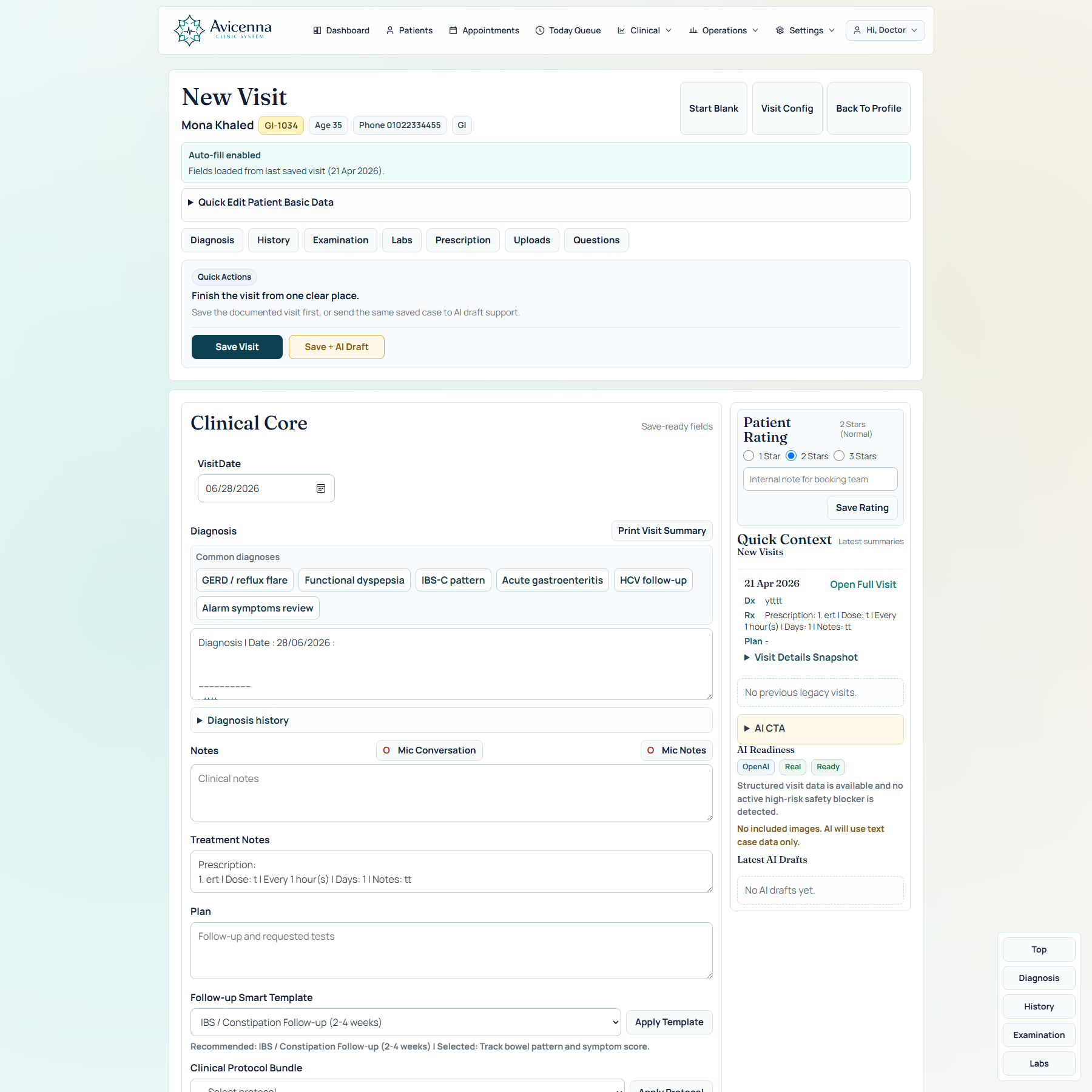
Live visit workspace with AI actions in Avicenna Clinic

The AI layer is built from five practical capabilities

Instead of one generic prompt box, the product treats AI as a set of connected clinical tools.

01

Provider selection

The clinic can manage multiple AI providers and choose the active path for recommendations and supporting flows.

  • Provider-aware configuration
  • Mock vs real mode control
  • Image-capable awareness
02

Full-case recommendation

The visit can generate AI output using full documented case data rather than isolated prompt fragments.

  • Diagnosis + notes + structured fields
  • Uploads and image inclusion flags
  • Follow-up and protocol hints
03

External AI compatibility

Doctors who prefer external AI tools can export a structured case prompt and import the result back into the same patient timeline.

  • Prompt/file export
  • Structured import schema
  • Pretty imported result display
04

Speech-to-clinical text

Speech dictation and conversation capture can support note entry and future structuring, while staying under doctor review.

  • Notes dictation
  • Conversation capture
  • Speaker labeling support
05

Safety and confidence cues

AI outputs are shown with safety/readiness framing so the doctor can judge whether the draft is clinically usable or needs caution.

  • Doctor review required logic
  • Readiness status and blockers
  • Confidence notes and imported state
06

Longitudinal AI memory

AI drafts do not vanish after use. They can remain in patient context and timeline so the doctor can revisit what was previously suggested.

  • AI history in profile
  • Timeline-aware display
  • Imported and generated output continuity

Two real screens that explain the AI story fast

The AI message becomes much clearer when we show both sides: the visit page where the doctor triggers support, and the configuration page where the clinic controls providers, speech, and runtime behavior.

AI inside the visit workspace

This screenshot proves that AI is not floating outside the chart. It sits next to diagnosis, notes, uploads, templates, protocols, and save actions, so the doctor stays in the workflow instead of context-switching into a separate tool.

Avicenna Clinic live visit workspace with AI support

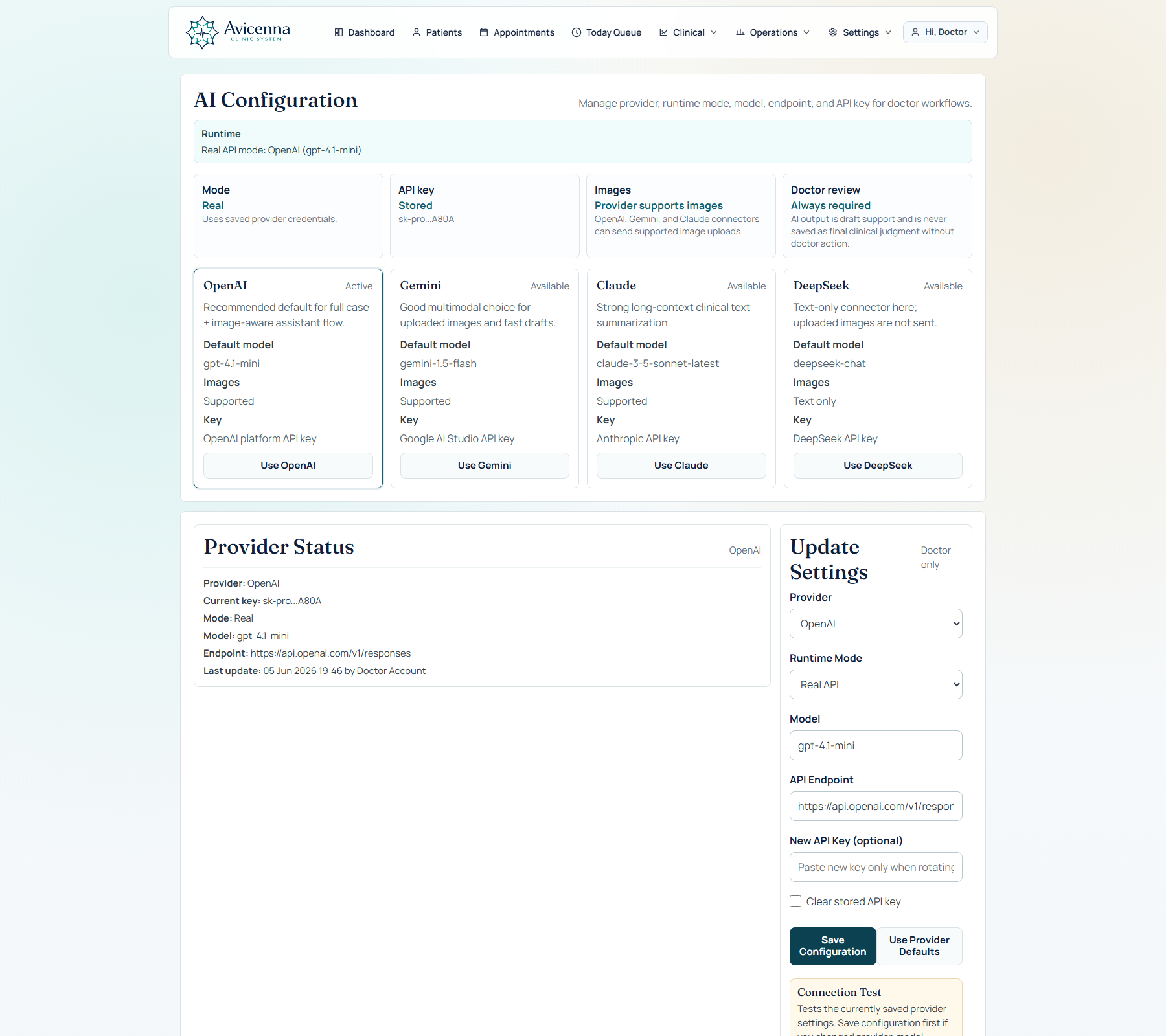
Provider and speech configuration

This screen proves controllability. Providers, runtime mode, language, and speech mapping are governed from a real configuration layer, which matters for clinics that want AI options without destabilizing doctor workflow.

Avicenna Clinic AI and speech configuration screen

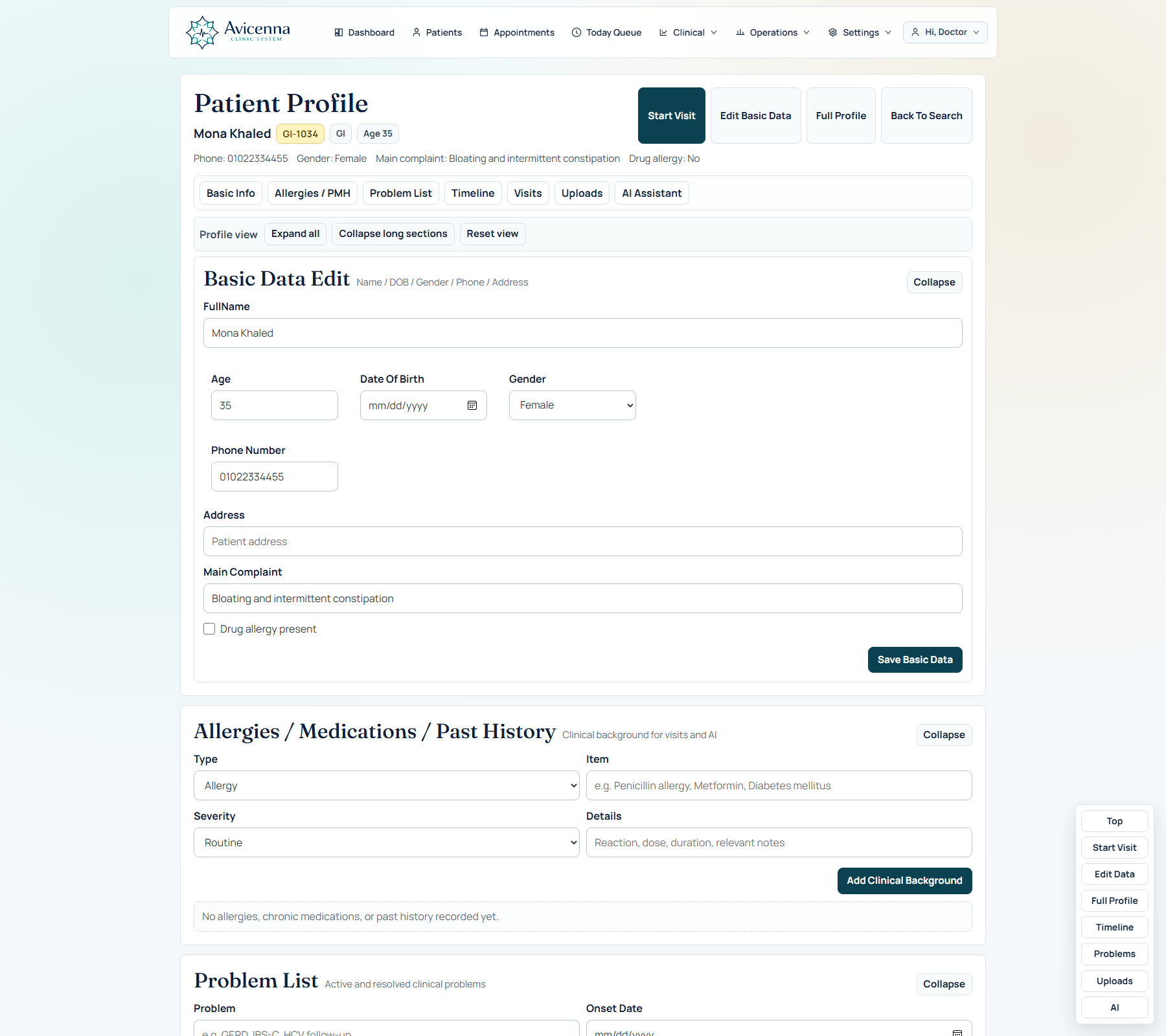
AI drafts return to the patient story instead of disappearing

This is the memory proof for AI. The value is not only generation; the result returns to patient memory, timeline, and future review so the doctor can revisit what was suggested later.

Avicenna Clinic patient profile showing continuity for AI drafts and patient memory

How AI is framed so it helps without annoying the doctor

The design principle here is support without interference. The system tries to stay useful, visible, and optional.

Structured, not chat-first

The assistant works from the visit and profile context, so the doctor is not forced into conversational overhead for every case.

One-click where it matters

Generate from the full case, include images deliberately, import external output, and return results to the same story.

Transparent state

Readiness, imported vs generated state, and provider context help the doctor understand what the system is actually doing.

Review before reliance

The interface supports clinical judgment rather than trying to replace it.